Sun Valley & the Wood River Valley
Professional Sculpture Installation
Most of a sculpture installation happens before anything is lifted. Weight, balance, materials, access, the mounting method and the space around the piece all shape the plan.
A small bronze on a pedestal and a large outdoor work anchored into concrete are both sculpture. They aren't the same installation.
Sculpture Needs a Plan
Hanging a picture is largely a question of the wall. Sculpture asks more. Where is the center of gravity? Will the surface mark if it's gripped in the wrong place? Does the piece sit on its own weight, bolt to a base, or need mounting points that don't exist yet? Some works sit politely on a pedestal. Others arrive on a pallet weighing several hundred pounds with no obvious way through the front door.
So we look at the work and the location together: doorways, stairs, elevators, thresholds, landscaping, floor protection, the finishes we'll be moving past, and the sightlines the piece will live with once it's in place. Outdoor work adds weather, drainage and long-term stability to that list.
For anything heavy, oversized or site-sensitive, we review the piece and the site before committing to an installation plan. We'd rather find the problem on paper than halfway up a staircase.
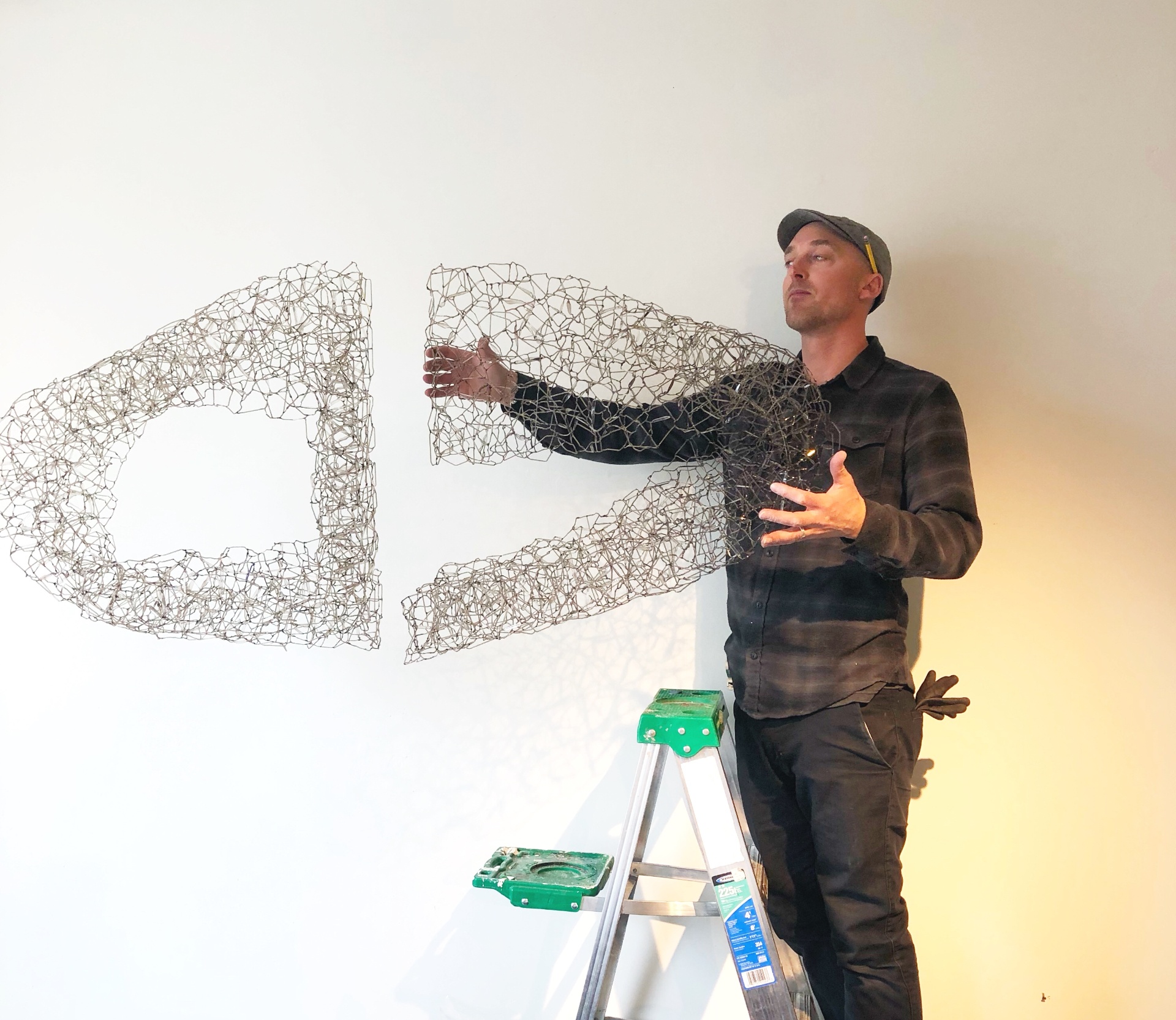
Indoor Sculpture Installation
We install freestanding sculpture, work on pedestals and plinths, wall-mounted sculpture, dimensional and mixed-media pieces, and heavy decorative objects that deserve fine-art handling even if they never came from a gallery. That work goes into private homes, galleries, offices and hospitality spaces around the valley.
The job usually starts at the truck: careful delivery, unpacking, and moving the piece through the building without touching anything it shouldn't. Floors and doorways get protected. Then comes positioning, leveling, securing the work to its base or the wall, and checking that it's genuinely stable rather than just standing still on a quiet afternoon.
Placement is a practical decision and a visual one. A piece has to be secure, but it also needs room to be seen — space to walk around, a background that doesn't fight it, and light that doesn't flatten it. We'll offer an opinion if you want one, and we're happy to move it twice before you decide.
Outdoor Sculpture Installation
Outdoor work carries more planning. We look at the existing concrete pad or prepared base, anchor locations and bolt patterns, mounting templates, and any specifications supplied by the artist, fabricator or engineer. Drainage, grade and landscape conditions matter, as does how the site behaves through a Wood River Valley winter.
Access is the other half of it. Can a vehicle reach the location? Is there room for equipment, and will the ground carry it? These questions decide the sequence long before anyone touches the sculpture.
The right mounting method depends on the piece, its base, the prepared site and the specifications that come with it. We don't design structural systems or provide engineering approval. When a project calls for engineering input, fabricated mounting components, concrete work, lifting equipment or licensed trades, we assess what's needed and coordinate with the appropriate professionals, then handle the artwork side ourselves.
Outdoor installations generally need a site visit before we can give you a firm plan or a quote. Photographs help, but they don't tell you what the ground is doing.
Wall-Mounted and Dimensional Work
Reliefs, assemblage, multi-panel work and wall-mounted sculpture rarely behave like a framed picture. Mounting points are irregular or hidden. Weight sits unevenly. A piece may arrive in five components that have to line up within a sixteenth of an inch.
We work with French cleats, custom hardware and templates where they suit the piece, and we mount into stone, timber, plaster, concrete and standard framed walls. For multi-part works we set out the alignment and spacing before anything is fixed. When custom hardware is the right answer, we'll coordinate with a fabricator rather than improvise.
The artwork and the wall get assessed together. Hardware chosen on appearance alone is how good pieces end up on the floor. For conventional framed work, see our picture hanging service in Ketchum.
Delivery, Unpacking and Placement
Installation is often one step in a longer sequence, and it goes better when the same team handles the rest of it. We can pick up or receive an incoming shipment, unpack the work, take away the packing materials, hold the piece in storage until the site is ready, then deliver, place and install it. Later on, we can remove, relocate or reinstall the same sculpture, including temporary exhibition installs that come back down on a date.
- Fine art transportation for local and regional moves
- Climate-controlled art storage between delivery and install
- Packing and coordinated custom crating for work heading out of the valley
We pack and soft-pack on site ourselves. When a piece needs a fabricated crate or a long-distance shipment, we coordinate that with the right specialists rather than pretending it's all done in-house.
Who We Work With
Some calls come from a collector who bought something at a gallery and needs it placed properly. Others come from a designer or contractor near the end of a build, when the sculpture is the last thing to arrive and the schedule has no slack left in it. We work with both, and with:
- Private collectors
- Galleries
- Artists placing their own work
- Interior designers
- Architects
- Builders and contractors
- Property managers and household staff
- Nonprofit arts organizations
- Hospitality and commercial spaces
- Estates and collection managers
How It Works
Review the Sculpture
Dimensions, weight, materials, photographs, mounting points and any instructions from the artist, gallery or fabricator. The more we know up front, the fewer surprises on install day.
Assess the Site
Access, floors, walls, the proposed location, an existing pedestal or concrete pad, and whether the job calls for equipment or additional specialists.
Plan the Installation
We confirm the handling sequence, the mounting method, crew size, equipment and any coordination needed before the piece is moved into position.
Deliver and Install
Protect the site, move and position the work carefully, complete the approved mounting or anchoring, then adjust for stability, level and how the piece reads in the space.
Not every job needs all four stages. A pedestal piece already in the house might take a phone call and an afternoon; an anchored outdoor work can take weeks of coordination. We scale the process to the sculpture.
What to Send Us
If you're getting in touch about a sculpture, this is what helps most:
- Photographs of the sculpture from several angles
- Dimensions
- Approximate weight
- Material
- Photographs of the base or mounting points
- Installation instructions from the artist, gallery or fabricator
- Photographs of the proposed location
- Details about stairs, elevators, gates, pathways and parking
- Information about an existing pedestal, plinth, concrete pad or prepared base
- Preferred timing
- Any known equipment, engineering or contractor requirements
Clear photographs and accurate dimensions let us tell you quickly what we can plan from here, what needs an on-site visit, and where another specialist should be involved. A tape measure and a phone camera save everyone a trip.
Serving the Wood River Valley
We install sculpture throughout the Wood River Valley. Projects beyond the valley are considered case by case, depending on the work, the location, access and scheduling.
Sculpture Installation Questions
Do you install both indoor and outdoor sculpture?
Yes. Indoors we handle freestanding work, pedestal-mounted pieces, wall-mounted sculpture and dimensional work in homes, galleries, offices and hospitality spaces. Outdoors we install on prepared pads, existing bases and anchor points. Outdoor and larger indoor projects usually need a look at both the sculpture and the site before we commit to a plan.
Can you install sculpture on an existing concrete pad or base?
Often, yes, but the pad or base has to be evaluated against what the sculpture actually requires. We check the anchor locations, the condition and thickness of the pad, the bolt pattern and any specifications from the artist, fabricator or engineer. If the existing base isn't right for the piece, we'll tell you what would need to change and who should do that work.
What information do you need to estimate a sculpture installation?
Photographs from several angles, dimensions, approximate weight, material, photographs of the base or mounting points, any installation instructions from the artist or fabricator, and photographs of where the piece is going. Details about stairs, gates, pathways, parking and doorways matter more than people expect. Good photographs and accurate measurements tell us quickly what can be planned remotely and what needs a site visit.
Can you arrange equipment or additional specialists for a heavy installation?
We can assess the project and coordinate with the right people. Some installations need lifting equipment, a fabricator for custom mounting hardware, a contractor for concrete work, licensed trades or an engineer's input. We don't provide engineering, crane operation or those trades ourselves. What we do is figure out what the job needs, bring in the appropriate professionals and manage the handling of the artwork throughout.
Can you transport and store the sculpture before it is installed?
Yes. We can receive an incoming shipment, unpack it, hold the work until the site is ready and then install it. Our fine art transportation and climate-controlled storage services are often used together with sculpture installation, particularly when a build or renovation runs behind schedule.